Details
THEROS WORLD forms the complementary counterpart to THEROS All Suite Hotel, situated immediately along its southern boundary. The two entities are spatially and functionally interconnected—sharing infrastructural and operational synergies—while THEROS WORLD retains full operational autonomy as an independent hospitality unit. The complex is developed on a 6,000 m² plot within the settlement of Nea Alikarnassos, Kos, located 1,500 m from the port and 150 m from the beach.
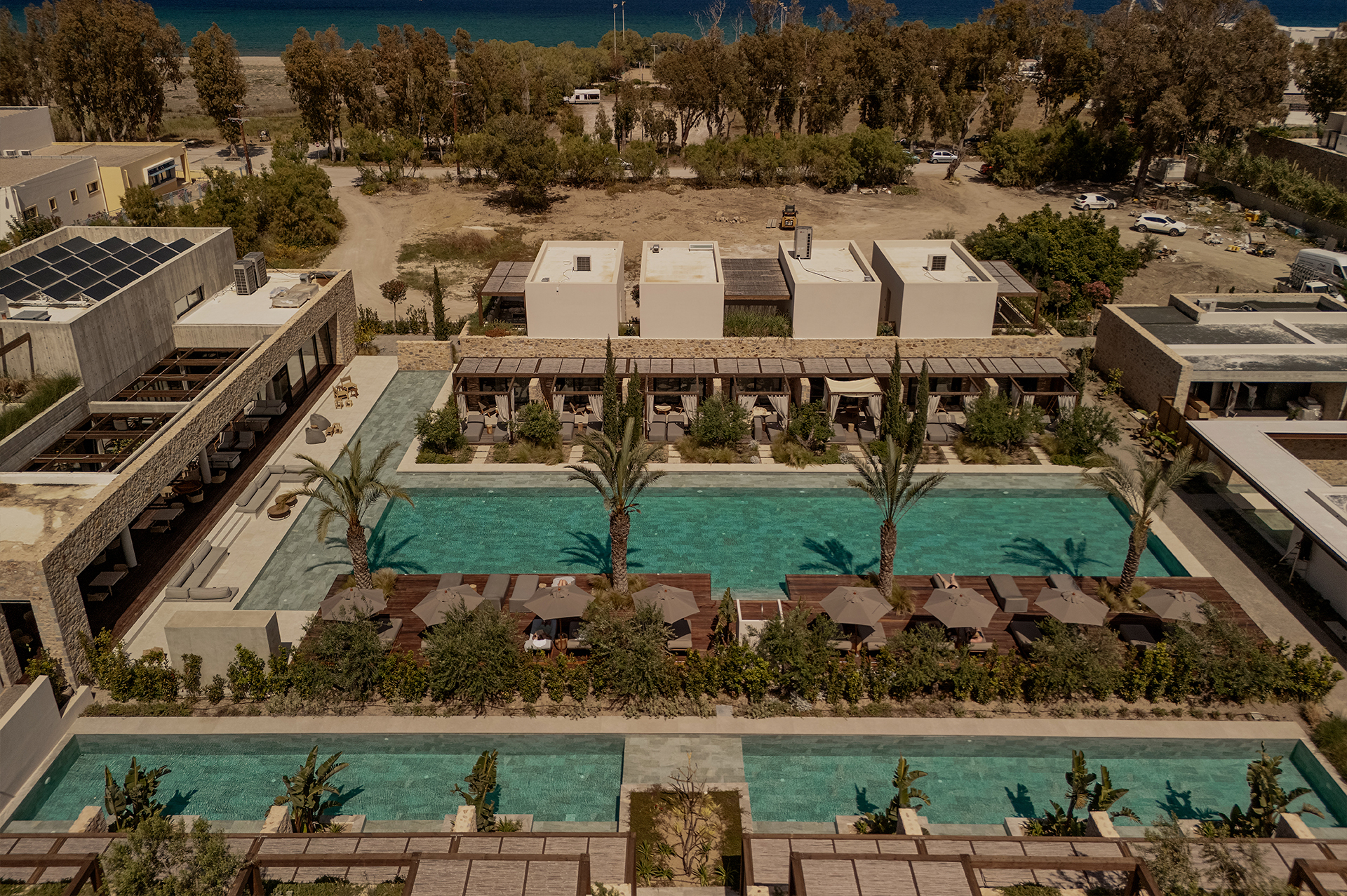
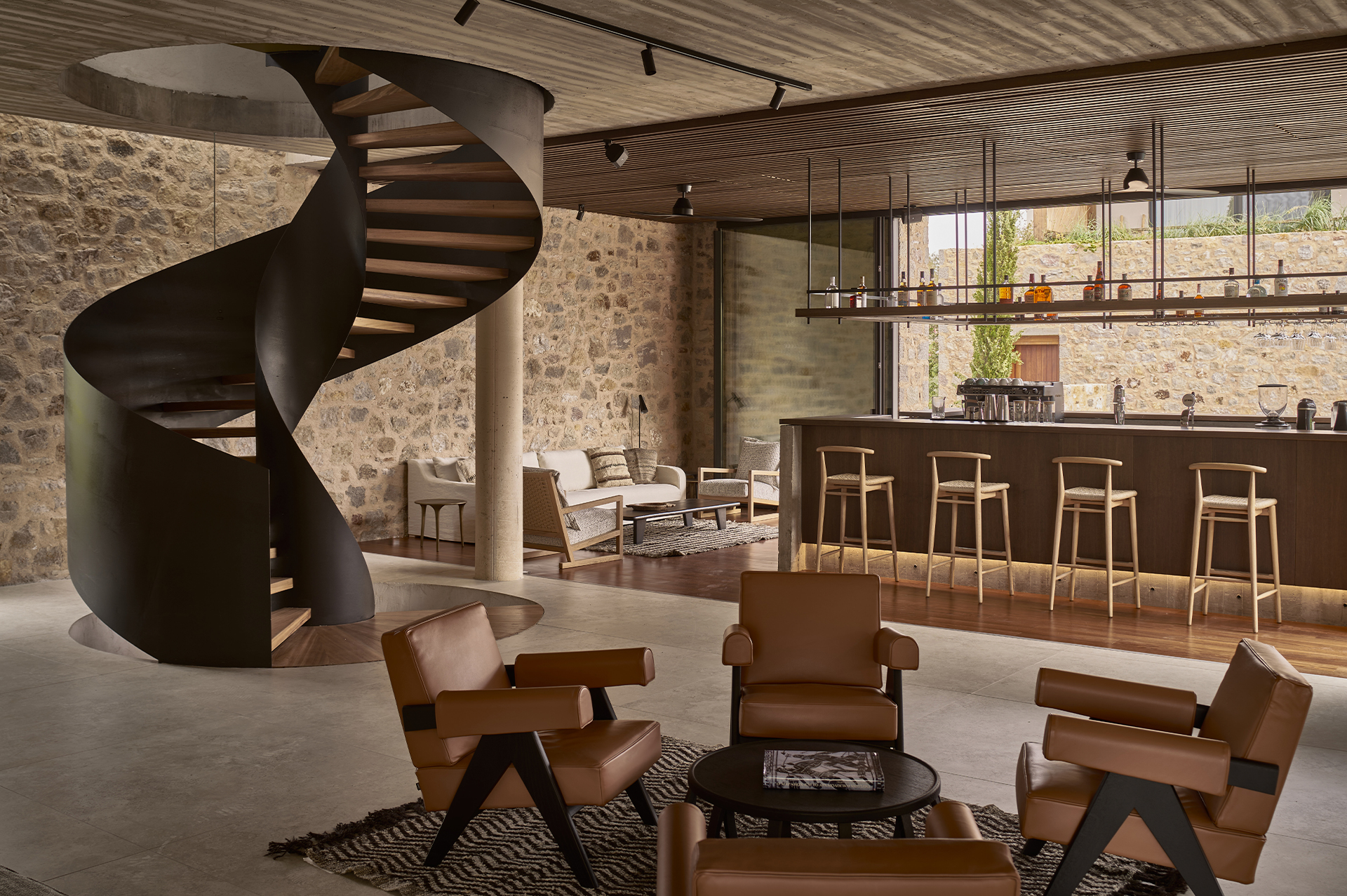
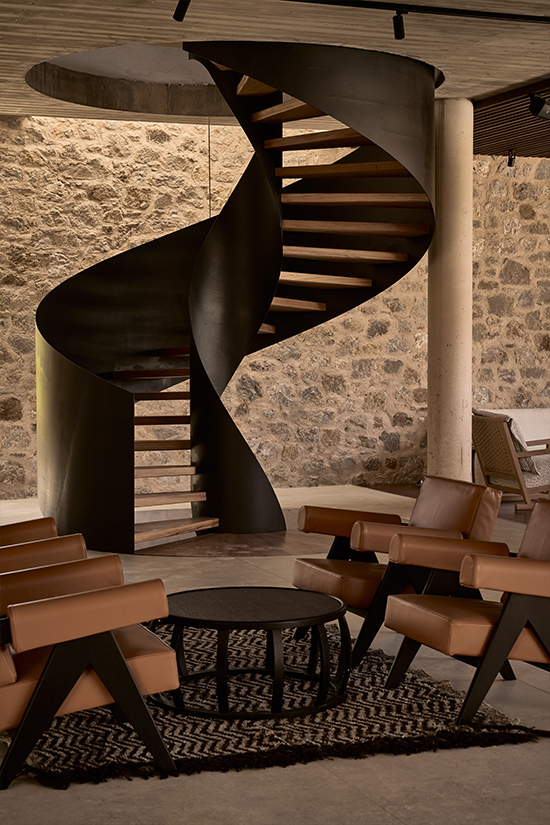
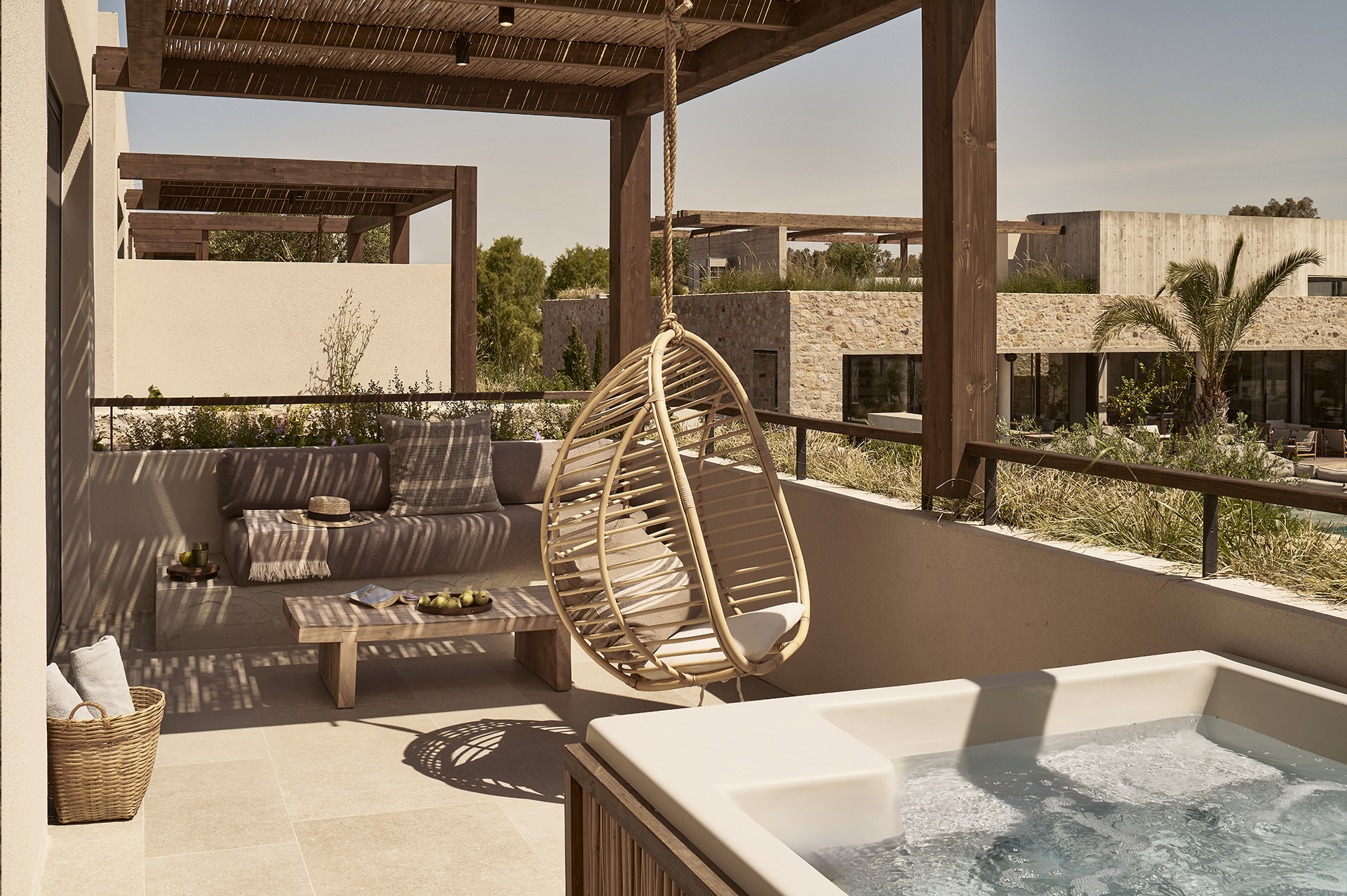
The architectural composition shares a coherent design language with its sister hotel complex, drawing inspiration from the archetypal structure of the Greek village while reinterpreting it through a contemporary vocabulary and architectural gestures. The built volumes, defined by their cubic geometry, are articulated through a material palette of locally sourced stone, rough- timber, and Greek marble—elements that anchor the ensemble harmoniously within its natural landscape and cultural context.The buildings are arranged along the inner side of the plot, forming a sheltered core with a central swimming pool, while avoiding direct visual contact with the surrounding settlement.
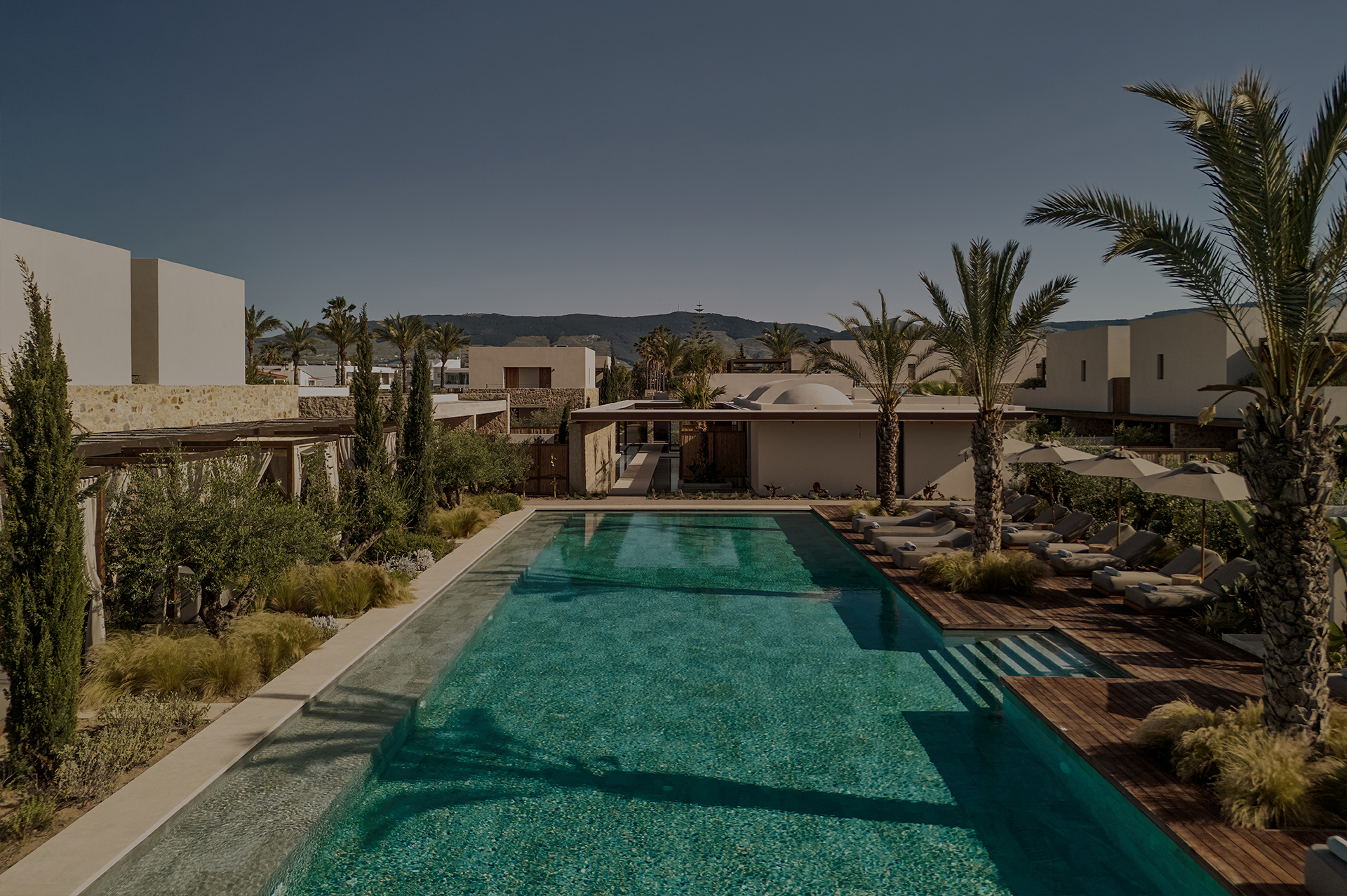
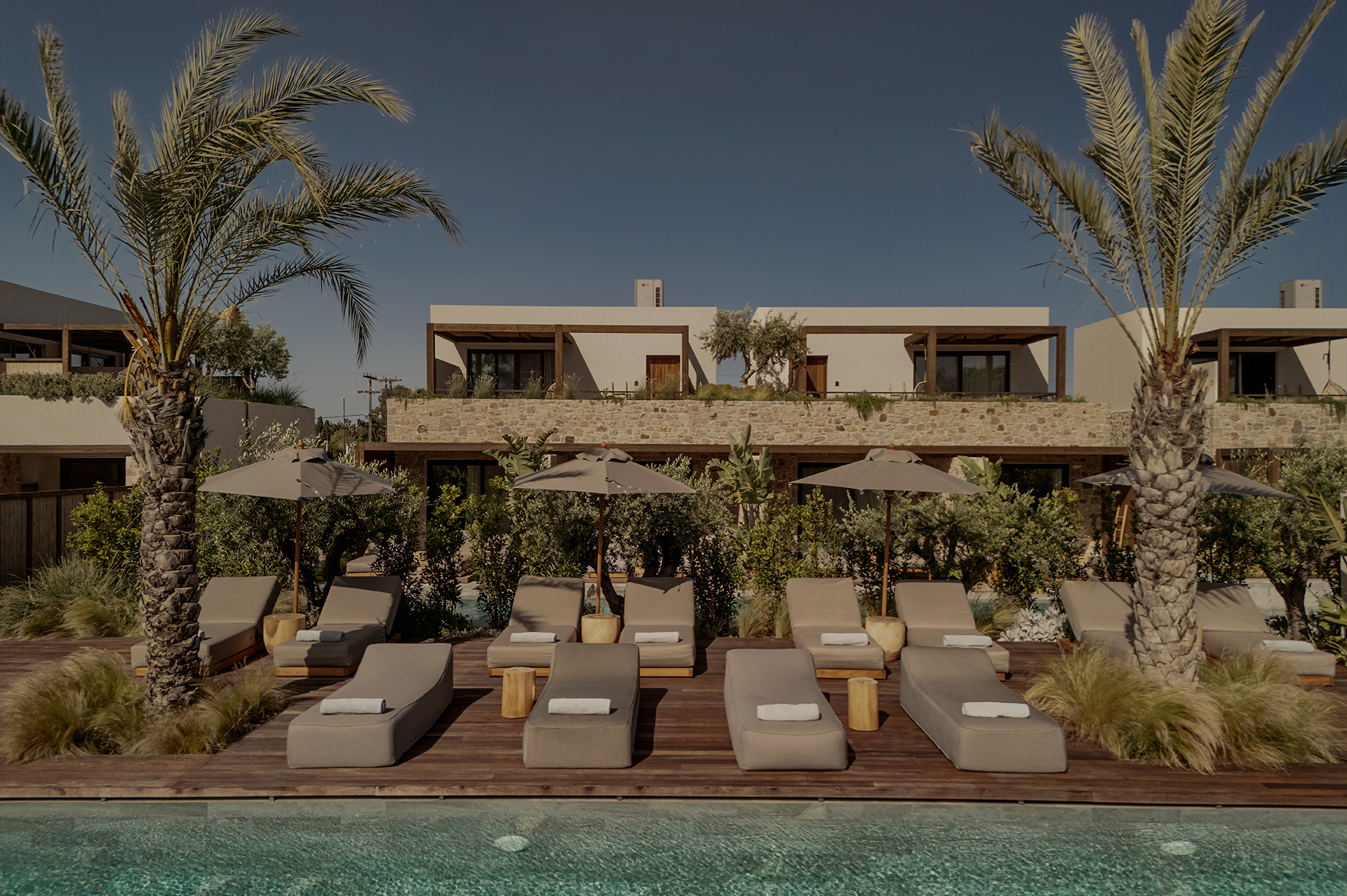
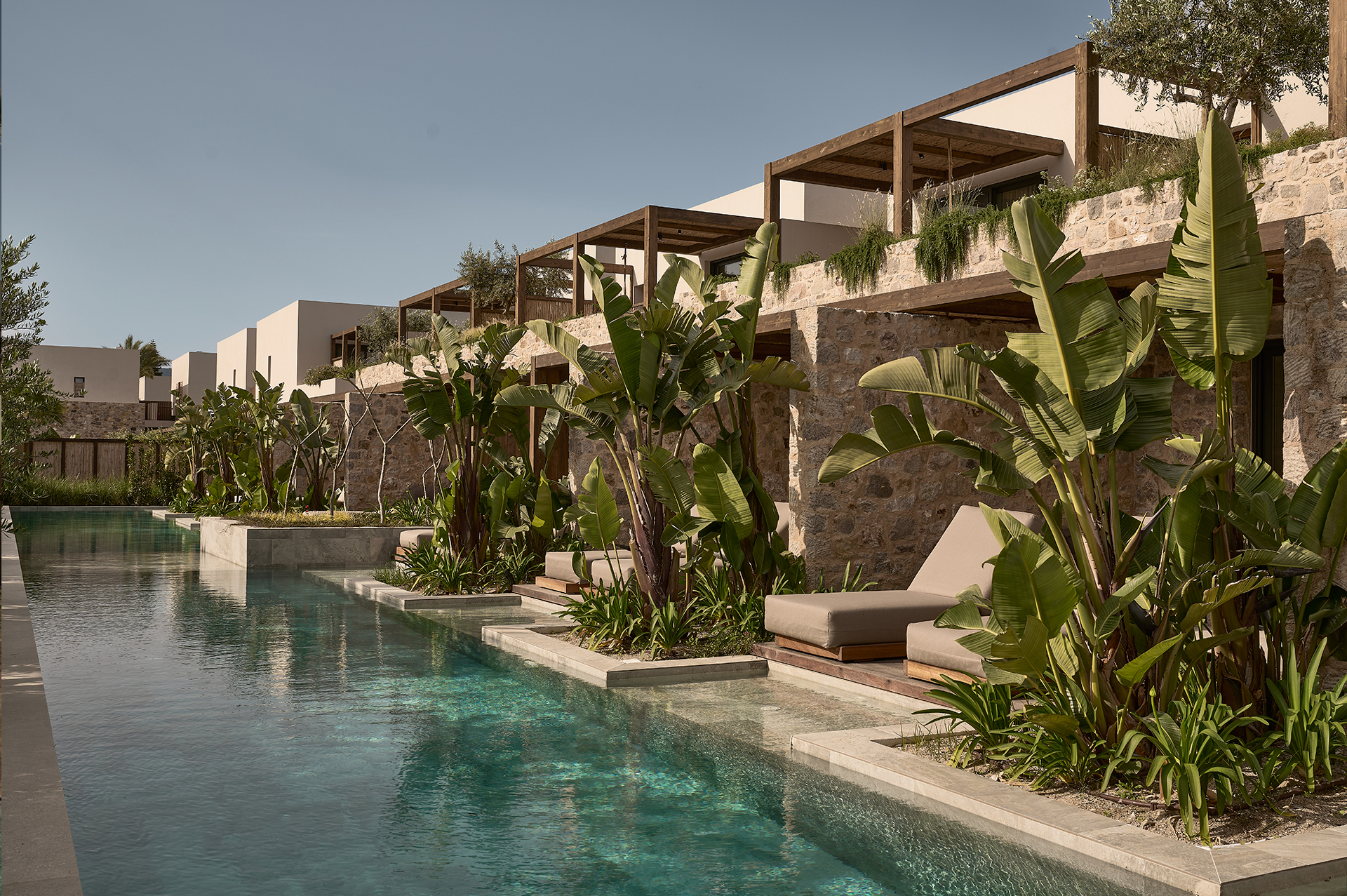
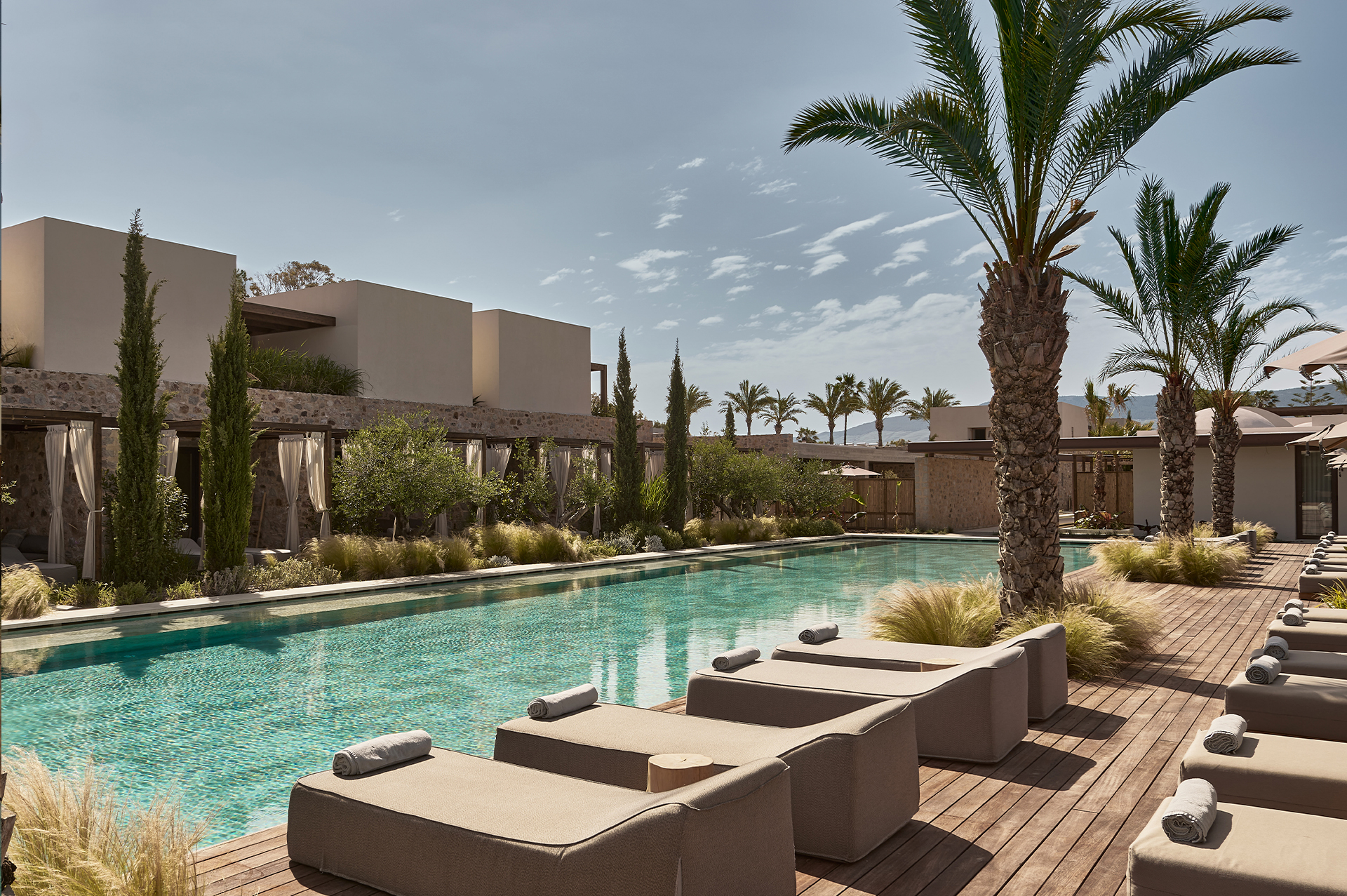
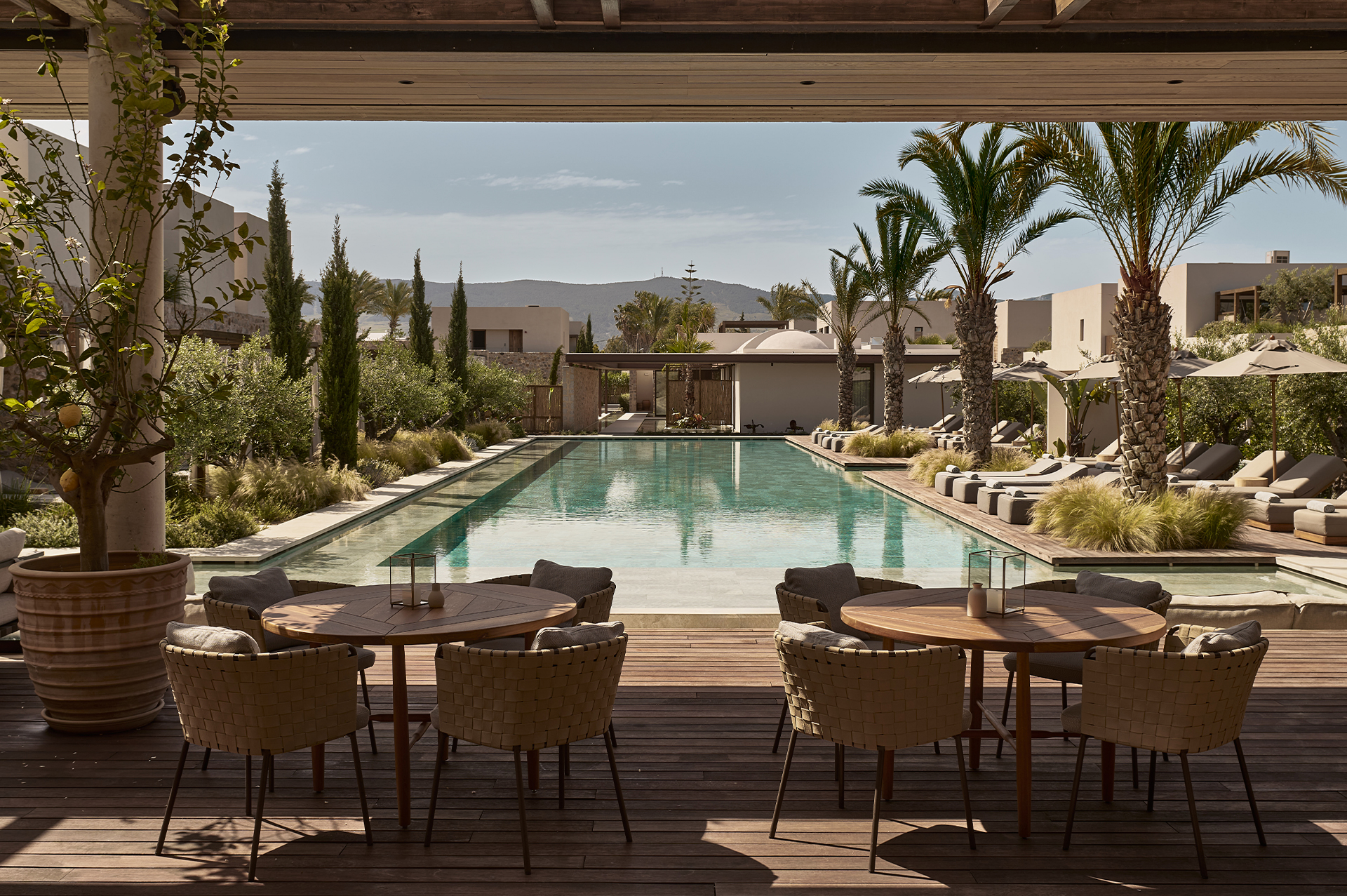
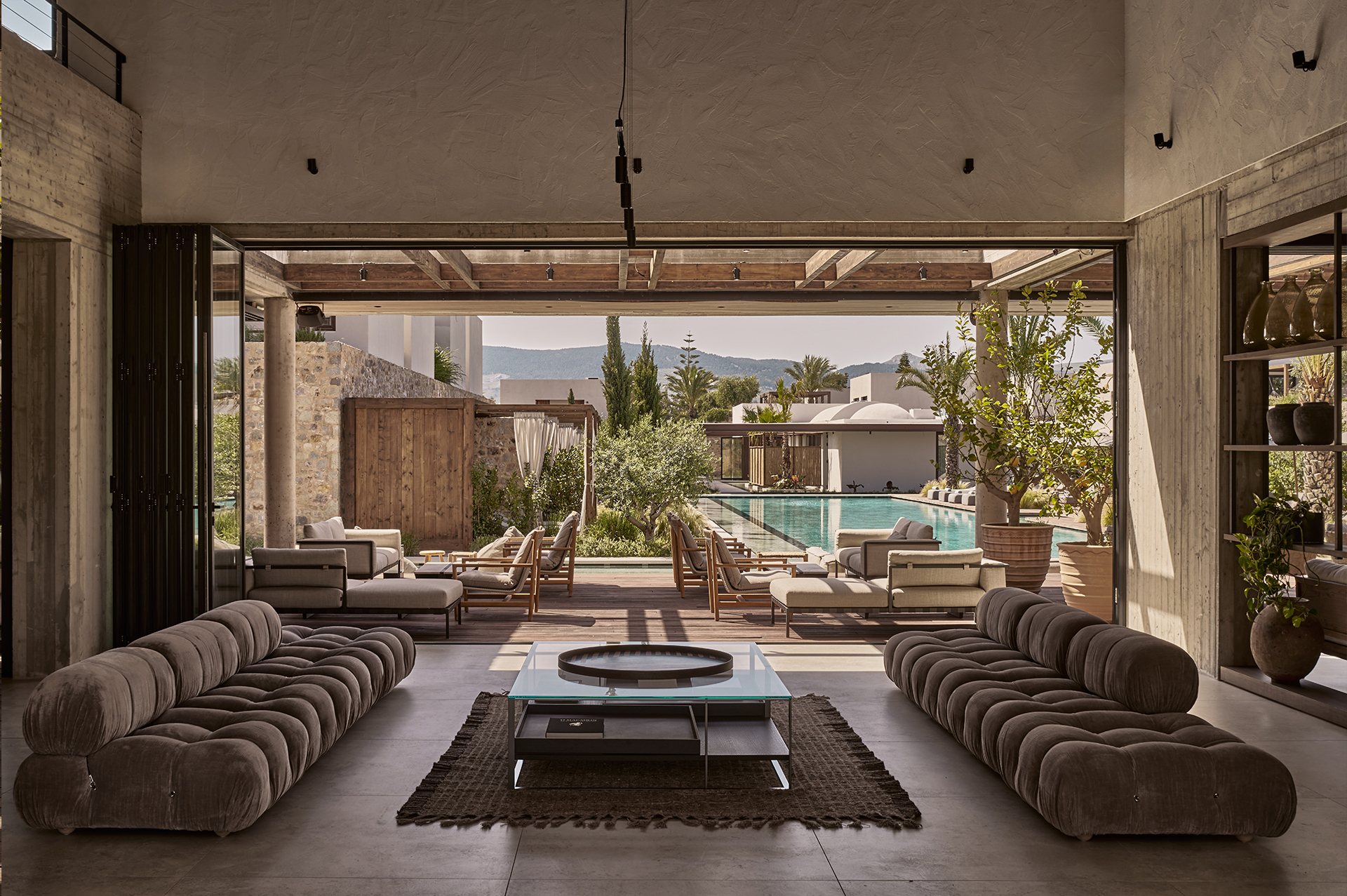
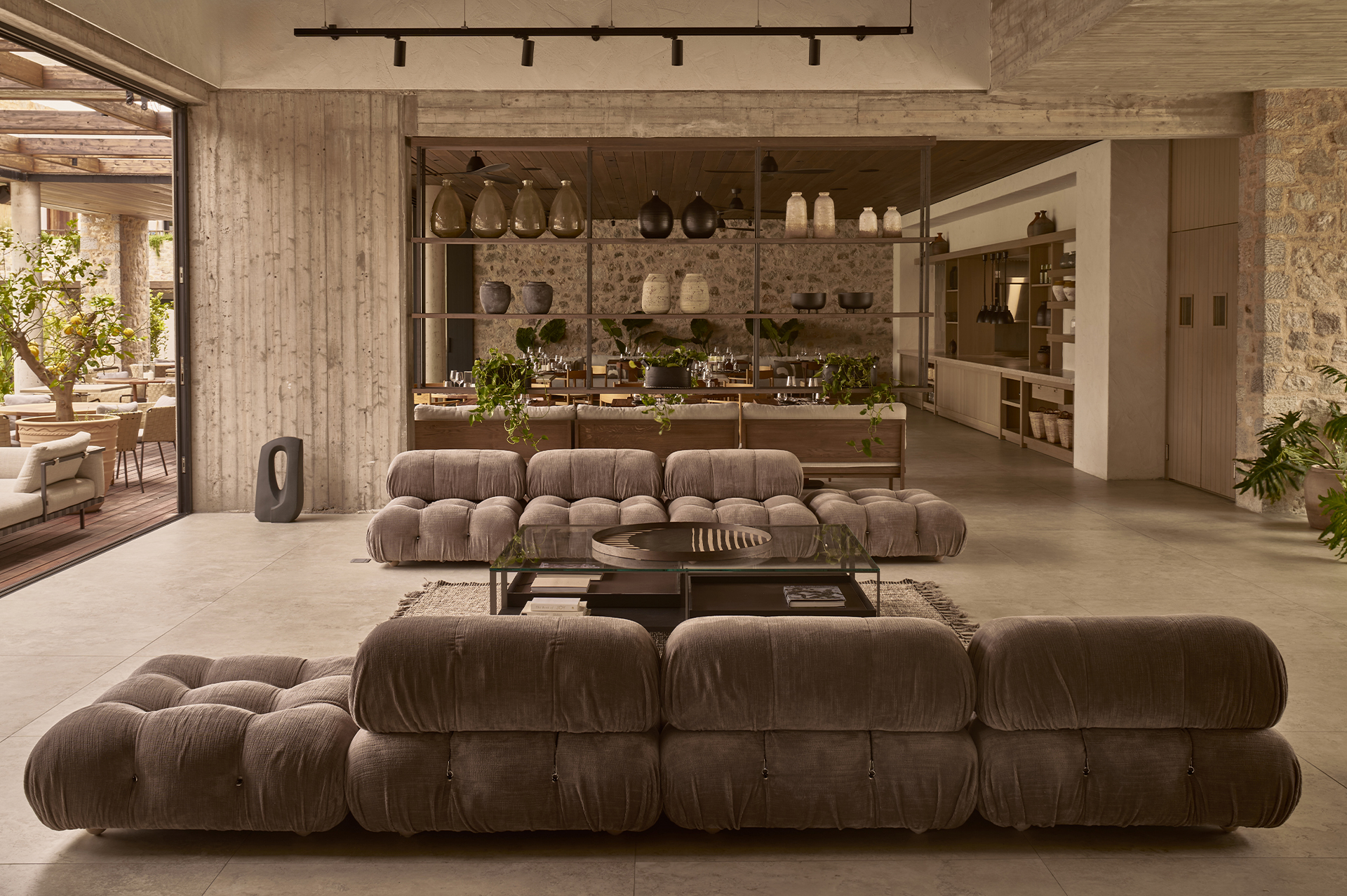
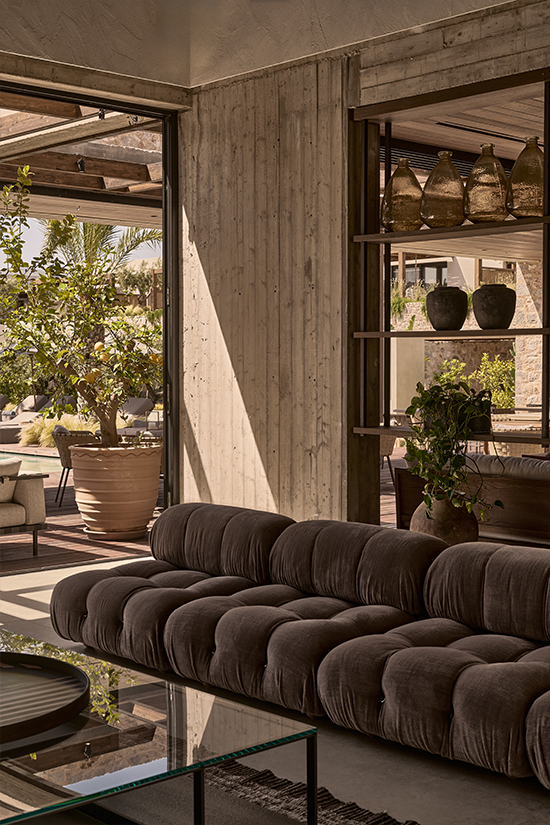
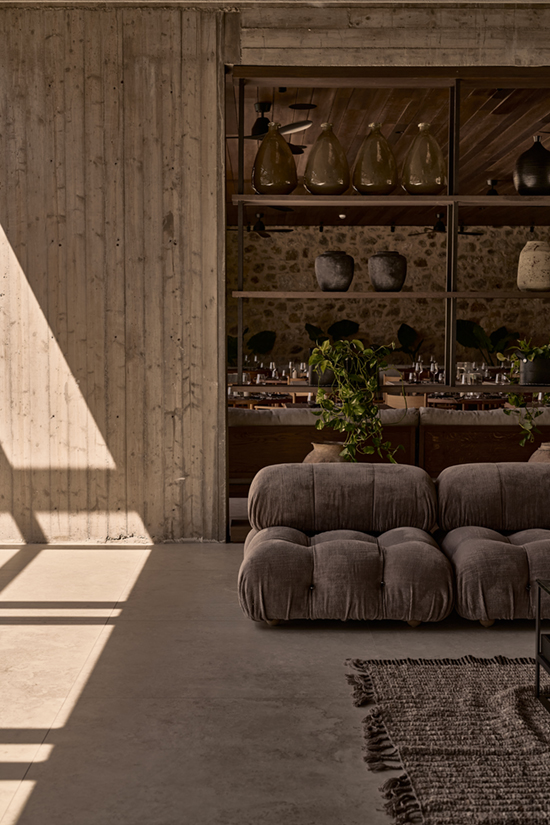
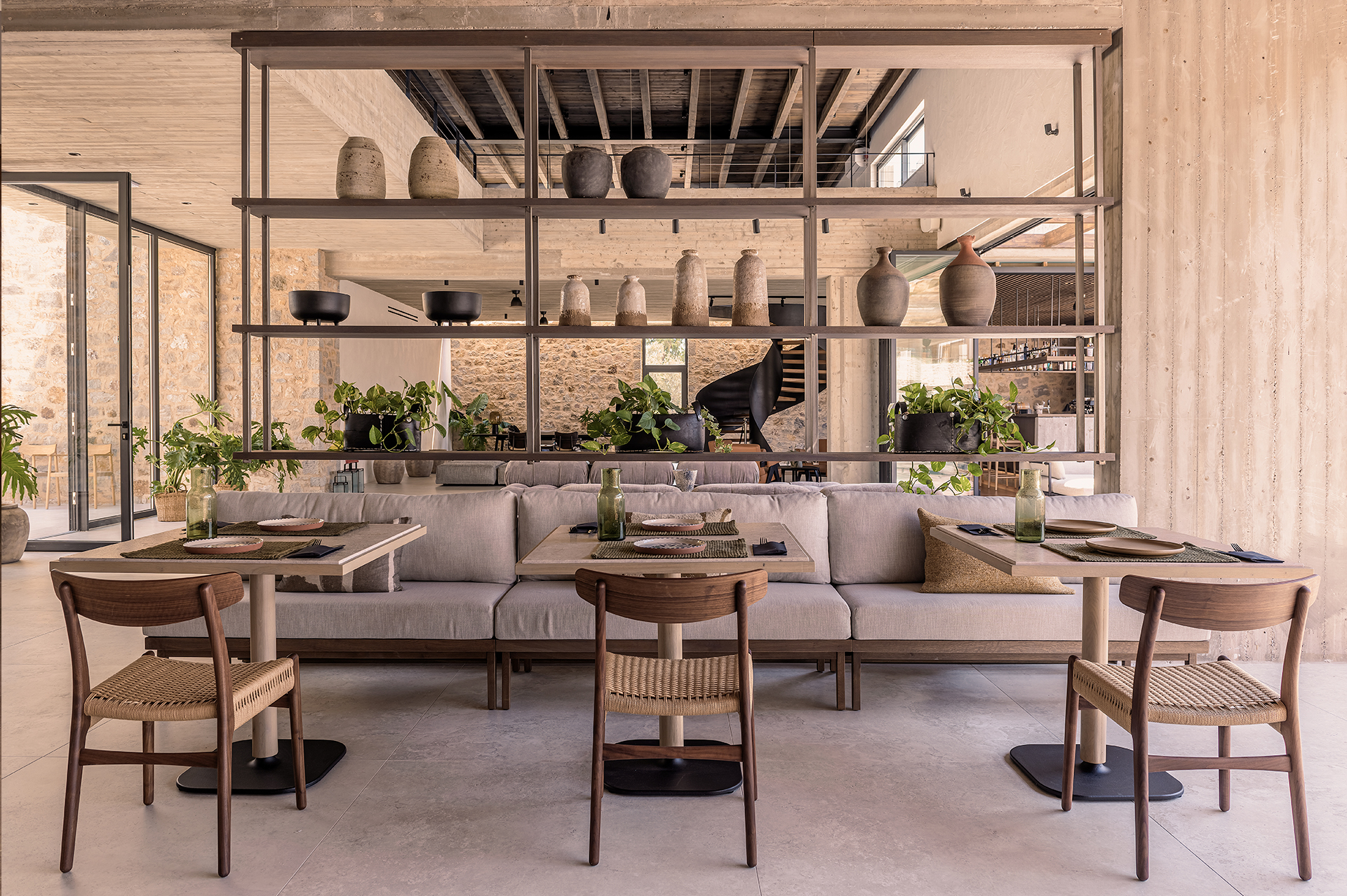
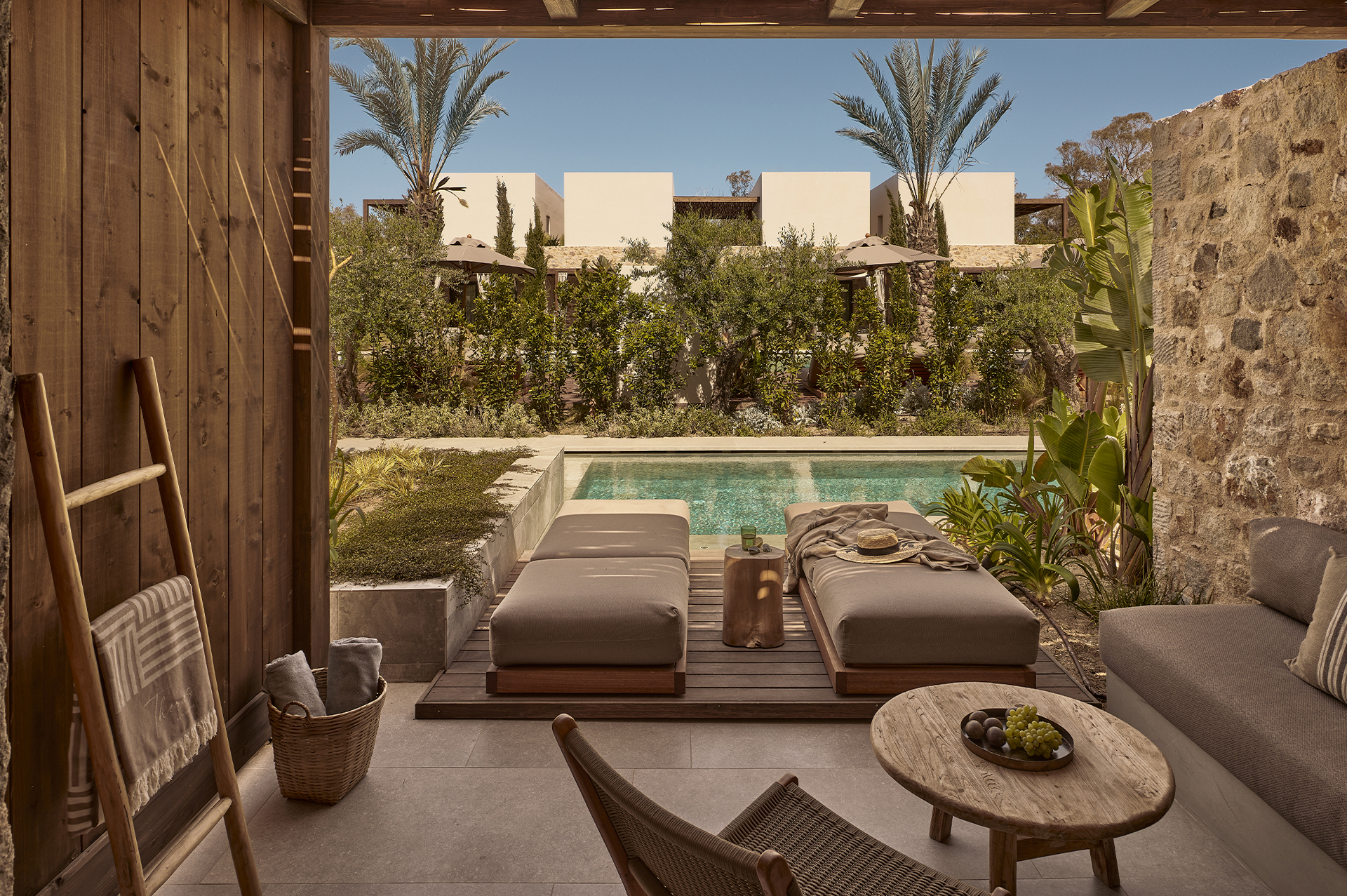
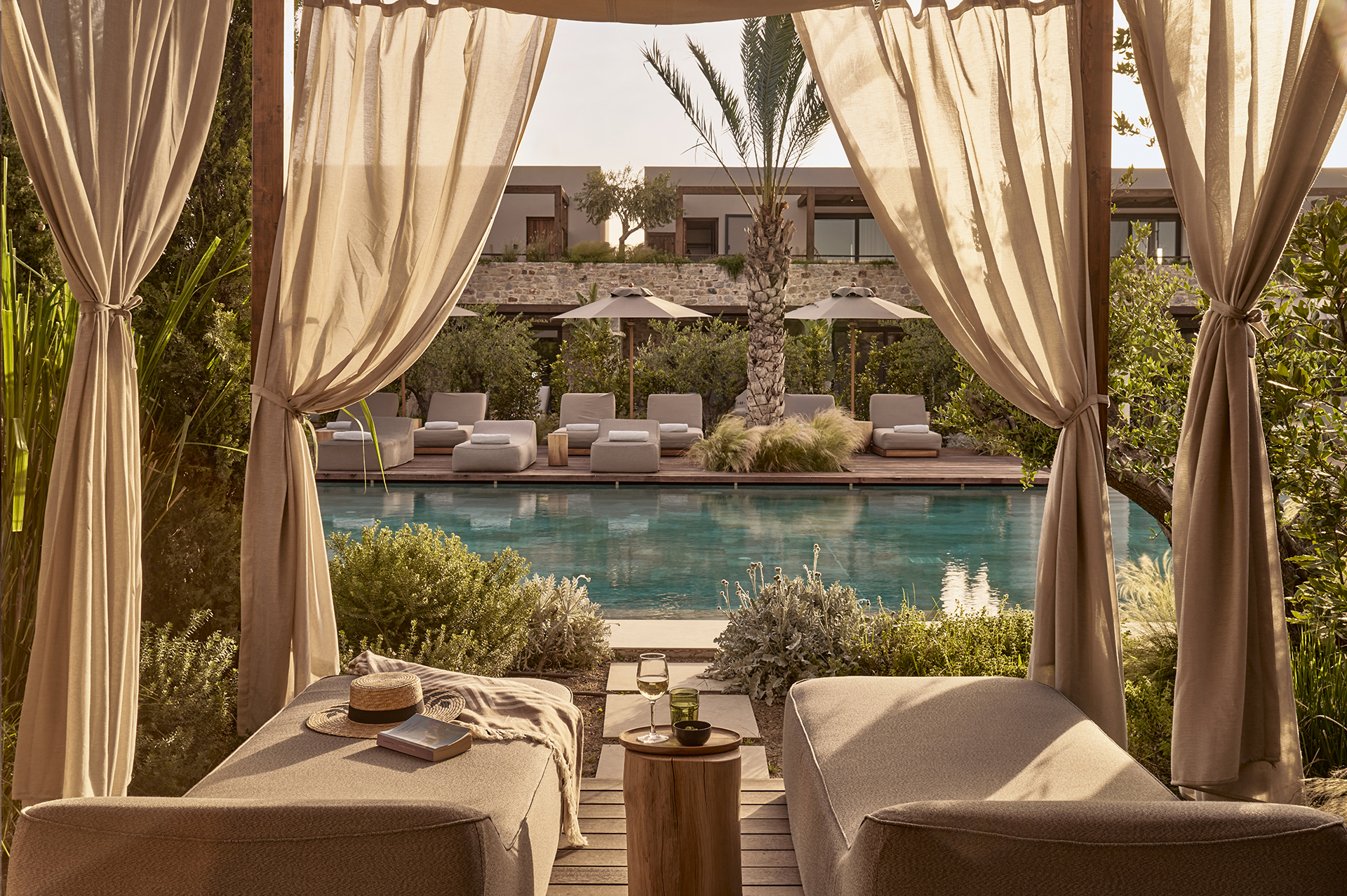
The main building is positioned along the northern road frontage as a monolithic stone volume, deliberately devoid of openings on its north façade to ensure protection from prevailing winds and to preserve privacy. Its sculptural form and material expression evoke the medieval castle of Kos, establishing a symbolic dialogue between the new structure and the island’s historic architectural heritage. Along its southern façade, expansive folding glass panels open fully onto a sequence of terraces, ornamental water features, the central pool, and the surrounding olive gardens. The threshold between interior and exterior dissolves seamlessly, reinforcing a continuous spatial experience that unites the built form with the landscaped environment. The private courtyards are organized around small pools and Mediterranean planting (olive trees, cypresses, palm trees), achieving a balanced dialogue between built and natural elements. On a collective level, the main axis is defined by the large central pool, around which suites with direct access to the water are arranged, all integrated within an olive grove.
At the far end of the central pool, the Wellness Building rises from the shallow waters and is approached via a light bridge that accentuates its serene detachment from the surrounding landscape. Its architectural morphology draws inspiration from the typology of Byzantine baths, reinterpreting domed volumes and steam chambers through a contemporary formal language. The entrance sequence unfolds beneath a partially open pergola, allowing the existing mature trees to grow freely and integrate naturally with the built form. Positioned at the junction of the two sister complexes, the Wellness Building assumes both symbolic and functional significance: it serves as a destination for rejuvenation and a transitional passage, an “open tunnel” that organically connects and balances the two architectural entities.
The design constraints were imposed by the existence of the sister hotel and the shape of the plot. The two plots have similar surface – about 6.000 sqm each – are narrow rectangles and are connected forming a T shape.The two entities should spatially and functionally be interconnected—sharing infrastructural and operational synergies—while THEROS WORLD should retain full operational autonomy as an independent hospitality unit. The architectural composition would share a coherent design language with its sister hotel complex.The first decision had been to create an introverted master plan, with the buildings arranged around the communal swimming pool. The entire complex is enclosed by solid stone walls, evoking the protective intimacy of traditional Aegean “chora” villages. Accessed via bridge-like passage over reflective pools, the structure create a threshold of transition — a passage from the public to the private, from movement to stillness. Its fortified presence defines the identity of the complex — a sheltered sanctuary of harmony, where architecture and nature embrace the essence of inner life.
The main building is positioned along the road as a monolithic stone volume without openings to the north, inspired by the medieval castle of Kos. ensuring protection from winds and providing privacy. On its southern façade, large folding glazed panels open toward the inner core. The connection between interior and exterior space is seamless, enhancing the continuity of experience between built and open space. On a collective level, the main axis is defined by the large central pool, around which suites with direct access to the water are arranged. This sheltered core is formed as an “ecosystem” of pools, reflective waters, communal and private terraces and mediterranean gardens, achieving a balanced dialogue between built and natural elements.
At the far end of the central pool, the Wellness Building rises from the shallow waters and is approached via a light bridge that accentuates its serene detachment from the surrounding landscape. Its architectural morphology draws inspiration from the typology of Byzantine baths, reinterpreting domed volumes and steam chambers through contemporary formal language. The entrance sequence unfolds beneath a partially open pergola, allowing the existing mature trees to grow freely and integrate naturally with the built form. Positioned at the junction of the two sister complexes, the Wellness Building assumes both symbolic and functional significance: it serves as a destination for rejuvenation and a transitional passage, an “open tunnel” that organically connects and balances the two architectural entities.
An adjacent organic garden, Bostani, contributes to the sustainability ethos of the hotel. Here, the hotel grows its own vegetables to be used for the kitchen, and the guests can enjoy a traditional meal under the olive trees.
Architecture, Concept, Interior design | Mastrominas Architecture
Construction | KIVOTOS SA
Photography | CLAUS BRECHENMACHER -REINER BAUMANN | George Papostolou